
Financial institutions need connected client information, consistent service processes and technology that supports regulatory and operational requirements. However, implementing a customer relationship management platform in banking or wealth management involves more than configuring software. It requires a clear understanding of business objectives, existing systems, data quality and the way employees manage client relationships.
Salesforce Financial Services Cloud Implementation can help banks and wealth managers establish a more connected approach to client lifecycle management (CLM), onboarding and relationship management. To achieve meaningful results, organisations must align the platform with their operating model and existing technology landscape. Finalix supports financial institutions through complex business and technology transformations, combining financial services expertise with hands-on implementation and delivery.
Why Salesforce Financial Services Cloud Implementation Requires Strategic Planning
A successful Salesforce FSC implementation starts with business outcomes rather than a list of technical features. Before selecting configurations or designing workflows, stakeholders should identify the problems they want to solve. These may include fragmented client information, manual onboarding, inconsistent compliance processes or limited visibility across relationship managers and operations teams.
Next, the organisation should define measurable objectives. For example, it might aim to reduce onboarding delays, improve the completeness of client records or give relationship managers a clearer view of outstanding tasks. These objectives help teams prioritise functionality and evaluate whether the implementation delivers practical value.
Finalix’s approach emphasises delivery ownership, collaboration between business and IT, and solutions that work within real operating environments. Therefore, implementation planning should establish clear responsibilities, decision-making processes and delivery milestones from the outset.
Define Business Requirements and the Target Operating Model
Business requirements translate strategic objectives into processes, roles and system capabilities. During discovery, teams should map how the organisation currently acquires clients, collects information, conducts reviews, manages approvals and maintains relationships. They can then identify unnecessary hand-offs, duplicated work and control gaps.
Importantly, the target design should reflect the institution’s operating model. A private bank, retail bank and wealth manager may share certain onboarding requirements, but their client structures, approval paths and relationship-management practices can differ considerably. Requirements should capture these differences without creating unnecessary complexity.
Align Salesforce FSC Implementation With Business Priorities
A practical implementation roadmap separates essential capabilities from later enhancements. Teams can prioritise foundational client data, onboarding workflows and compliance controls before introducing more advanced automation or additional business units. This phased approach supports early testing and gives stakeholders opportunities to refine the solution.
Finalix also emphasises staying close to standard Salesforce functionality where appropriate. Rather than customising every process to reproduce legacy behaviour, institutions should evaluate whether established platform capabilities can meet their requirements. Custom development remains useful when a genuine business need justifies the additional complexity.
Data Migration and Client Information Quality
Data migration is one of the most consequential stages of a financial services implementation. Client information may be spread across core banking platforms, spreadsheets, legacy CRM tools, document repositories and compliance applications. Inconsistent names, duplicate records, outdated addresses and incomplete ownership details can undermine the new platform if teams simply transfer the existing data without validation.
A controlled migration begins with data discovery and mapping. The project team identifies source systems, determines which records must move, defines the target data model and establishes rules for transformation. It should also agree how duplicates, missing fields, historical records and conflicting values will be handled.
Migration testing is equally important. Rehearsals should verify record counts, relationships, required fields and business-critical information. In addition, business users should validate representative client records before the final cutover. This helps uncover issues that technical checks alone may miss.
For wealth managers, migration can become particularly complex when client lifecycle management and custody data need separate treatment. Finalix has published a banking transformation case involving the transition from outsourced core banking to an internal booking centre, including client data migration into a new internal model. The case illustrates why data architecture and business processes must be designed together.
Aligning Salesforce With Existing Core Banking Platforms
Salesforce should not automatically replace the core banking system. In many institutions, the core platform remains responsible for authoritative account, balance and transaction records, while Salesforce supports client engagement, relationship management and selected lifecycle workflows. A successful implementation defines the responsibilities of each system and establishes how information moves between them.
The integration design should identify which system owns each data element, how frequently updates must occur and what happens when a connection fails. For example, a relationship manager may need current financial account information in Salesforce without making Salesforce the authoritative ledger. Depending on the use case, the solution may retrieve information on demand, synchronise selected fields or use an integration layer to coordinate communication.
Security and operational controls also require attention. Access permissions, audit trails, error handling, monitoring and reconciliation should be designed into the integration. Furthermore, the team should test delayed messages, unavailable services and conflicting updates rather than validating only the ideal scenario.
Finalix’s Salesforce-in-banking experience includes a client lifecycle management platform designed around an existing financial technology landscape. Its published case study describes a solution built close to the Salesforce standard, integrated with the client environment and designed to scale across additional business units. This reflects the value of connecting platforms thoughtfully instead of pursuing a disruptive rip-and-replace strategy.
Salesforce Financial Services Cloud for Banking and Wealth Management
Salesforce Financial Services Cloud for banking can support client information management, relationship visibility, onboarding and service workflows. However, its value depends on how well these capabilities match the institution’s actual processes. A platform should give employees useful context and guide them through tasks rather than add another layer of administration.
For banks, implementation priorities may include prospect management, customer onboarding, service requests, household or relationship structures and coordination between business units. Teams should define how referrals, approvals and client updates move across the organisation. In addition, workflows must accommodate applicable compliance checks and evidence requirements.
For wealth managers, Salesforce implementation for wealth management often involves more detailed client relationships and lifecycle controls. Processes may include collecting know-your-customer information, reviewing source of wealth, managing suitability-related information, coordinating approvals and tracking periodic reviews. The solution should make responsibilities and outstanding actions visible while preserving appropriate access to sensitive data.
Finalix’s experience in client lifecycle management is particularly relevant to these challenges. Its approach connects business processes, data architecture and platform delivery so that the system supports the full client journey rather than isolated CRM activities.
Design Client Lifecycle Workflows Around Real Operations
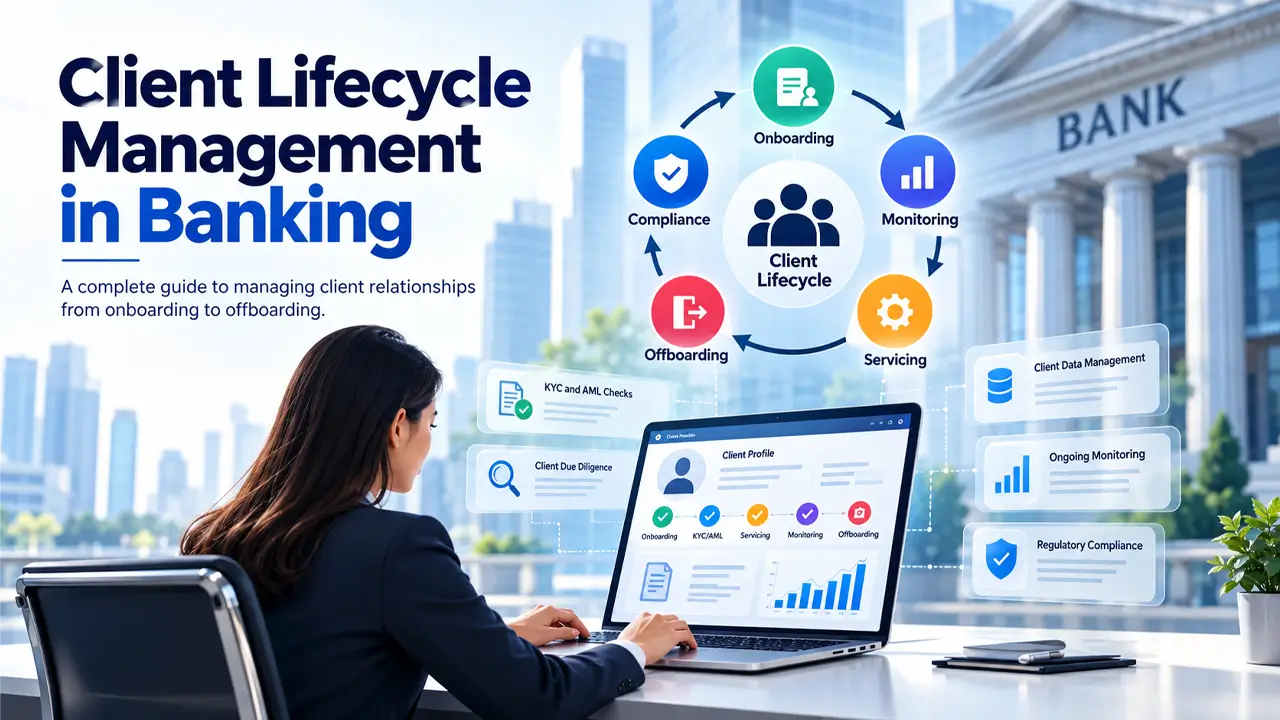
Client lifecycle workflows should connect the stages a client experiences, from initial contact through onboarding, ongoing servicing and periodic review. Without clear ownership, teams may rely on email chains and manual reminders, making it harder to identify delays or missing information. A well-designed workflow establishes the next action, responsible role and conditions required to progress.
For example, an onboarding process might collect client information, request supporting documents, trigger risk checks, route exceptions for approval and record completion. Automation can reduce repetitive administration, but the workflow must also handle incomplete submissions, unusual cases and escalations. Otherwise, automation may simply move bottlenecks from one department to another.
Institutions should also measure the performance of these processes. Useful indicators include onboarding cycle time, incomplete-record rates, overdue reviews and the number of manual interventions. Reviewing these measures after launch helps teams identify where the process needs refinement.
User Adoption, Governance and Continuous Improvement
Even a technically sound implementation can fall short if employees do not use it consistently. Relationship managers, operations teams and compliance specialists need workflows that fit their responsibilities. Consequently, user adoption should begin during requirements gathering, when representatives can explain their working practices and test proposed designs.
Training should be role-specific and practical. Employees need to understand not only which buttons to select but also how the platform supports their daily tasks. In addition, clear guidance, accessible support and feedback channels help users build confidence after go-live.
Governance is just as important. The institution should assign ownership for data quality, platform configuration, access permissions and future enhancements. A controlled release process can prevent quick fixes from creating technical debt. Regular reviews of usage, workflow performance and user feedback then help the platform evolve alongside the business.
Common Implementation Challenges and How to Address Them
Financial institutions often face several connected challenges: unclear requirements, inconsistent legacy data, complex integrations, excessive customisation and limited user engagement. These issues can reinforce one another. For instance, incomplete discovery may lead to rushed custom development, which increases testing effort and makes future upgrades harder.
A disciplined delivery model helps manage these risks. Institutions should establish decision-makers early, validate data before migration, test integrations under realistic conditions and introduce functionality in manageable stages. They should also define acceptance criteria for each release so that progress is measured by business readiness rather than technical completion alone.
Another challenge is coordinating teams across business units, technology functions and external providers. Clear accountability, shared milestones and regular issue resolution help keep delivery moving. Finalix’s model of embedding into client teams and taking ownership across delivery roles supports this practical emphasis on execution.
Conclusion
Salesforce Financial Services Cloud Implementation can help financial institutions connect client information, improve lifecycle workflows and strengthen collaboration across business and technology teams. However, results depend on more than platform configuration. Institutions must define business requirements, prepare data carefully, integrate with existing core banking systems and invest in governance and user adoption.
Finalix brings financial services expertise and hands-on transformation delivery to these challenges. By aligning the Salesforce platform with the institution’s operating model and existing technology landscape, organisations can establish a foundation that supports current needs while remaining adaptable as the business evolves.
Frequently Asked Questions
It involves configuring Salesforce for financial services processes, including client management, onboarding, relationship workflows, data integration and operational controls.
Timelines depend on scope, integrations, data quality and governance. A phased rollout can deliver an initial business capability before wider expansion.
Yes. Integration architecture can connect Salesforce with core banking systems while preserving clear data ownership, security controls and operational responsibilities.
Common challenges include complex client structures, source-of-wealth checks, legacy data migration, compliance workflows and coordination between relationship managers and operations.
Finalix embeds into client teams and supports business analysis, delivery leadership, platform implementation and coordination across business and technology stakeholders.