
Key takeaways:
The focus should be on customers’ values to develop suitable investment solutions and promote interest in sustainable investments.
European regulations on ESG Investments have led to the vast majority of clients opting out of the regulatory ESG approach, although interest in ESG investments remains high.
Sustainable investments should be seen as a strategic priority, focusing on customer needs to tap into the potential of the latent demand while ensuring regulatory compliance in the background.
Keynote Speech: Shifting to a Client-Centric ESG Approach
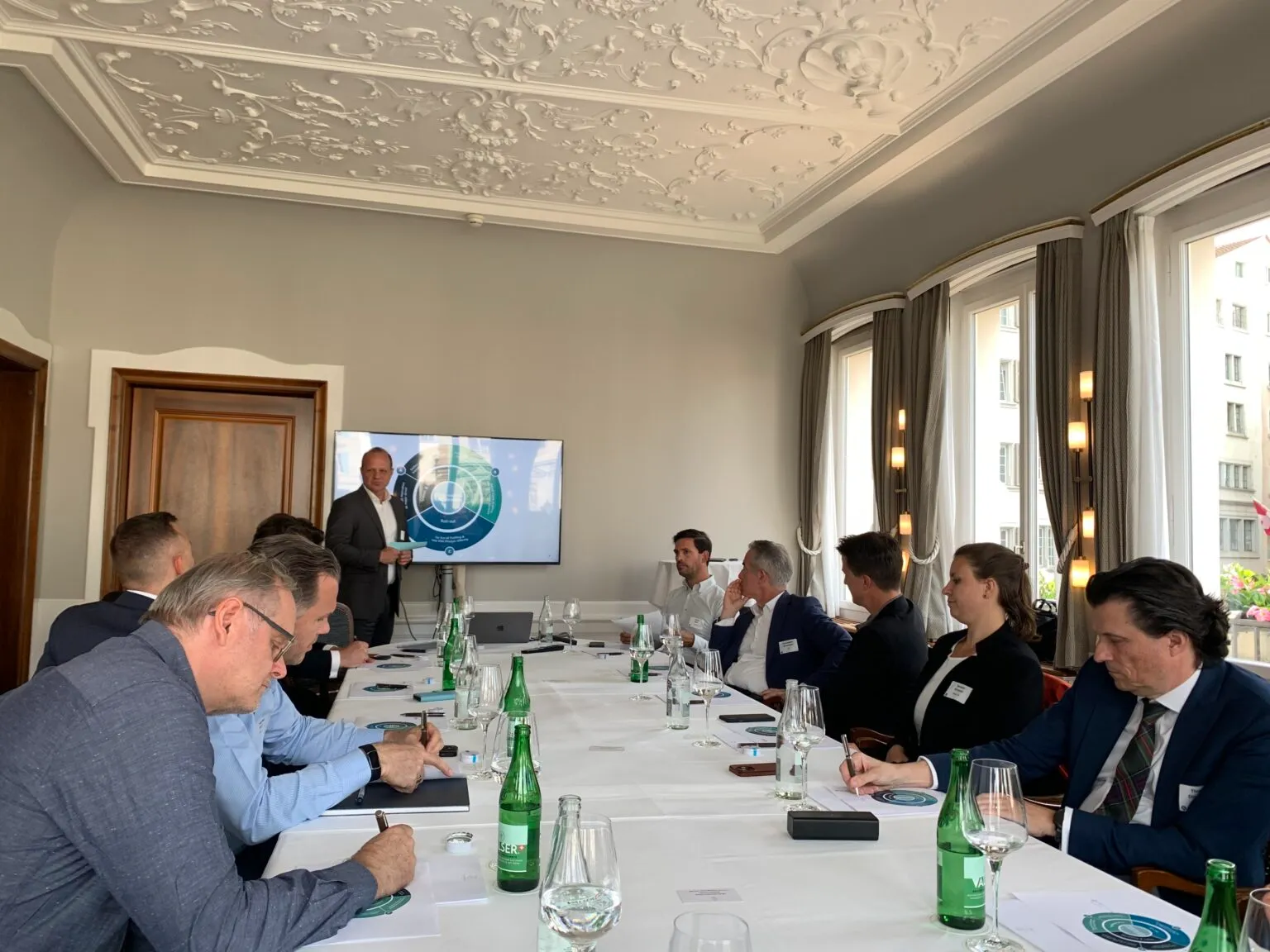
The fourth Finalix Sustainable Finance Roundtable on June 12, 2024 in Zurich, began with a keynote speech by Marcus Fenchel on the topic of regulation-driven strategy. In this presentation, he proposed a client-centric approach. This focuses on ESG client motivations and sees itself as a further development of the currently dominant regulation-centric approach. On this basis, the participants discussed whether a “back to the basics” approach would help to bring clients closer to the topic of sustainable investing. This would mean working more closely with the customer’s values and developing suitable investment solutions on this basis. This approach contrasts with current practice, which consists of asking clients whether and, if so, which of the ESG preferences specified by the regulation they wish to consider in their investments. In addition, the participants pointed out that in today’s world, characterized by geopolitical events, some of the values of customers and thus the idea of what sustainability means are changing. An open discussion with clients should therefore always form the basis of the advisory process.
Impact of European Regulations on ESG Investments
In general, the prevailing opinion is that the European regulations (in particular SFDR) have led to the vast majority of clients opting out of the regulatory ESG approach, contrary to the objective of the EU Action Plan, although interest in ESG investments remains high. However, institutional clients and wealth management clients have different ESG motivations. For institutional clients, the focus is on return on investment, so ESG aspects of an investment only play a role if they contribute to an improvement in the risk/return ratio. In the case of wealth management clients, it is noticeable that traditional investment strategies with a focus on risk-return optimization predominate, although a relevant proportion of these clients are interested in impact investment. This is because the SFDR requirements for impact products are currently only met by very few investments. However, there are also positive developments, such as clients with larger assets who achieve a positive impact within the framework of foundations. The understanding of sustainable investments is also changing, with new aspects such as security or geopolitical stability increasingly being subsumed under ESG.
Strategic Priority for Banks
In the final part of the roundtable, the participants discussed how banks can view sustainable investments as a strategic priority to tap into the latent demand potential generated by regulation. There was a consensus that compliance with regulatory requirements should be ensured in the background and should only be discussed with customers if this is necessary. This is because contact with customers should focus on their motivations and needs, create transparency and speak an understandable language so that customers can make informed decisions.
Conclusion and next steps
In summary, ESG-related regulation in the EU seems to have failed so far to achieve its goal of increasingly steering financial flows towards sustainable investments. However, it has given banks the opportunity to score points with their clients with a client-centric ESG strategy that focuses on ESG client motivations and to tap into the latent demand potential.
We look forward to continuing these important discussions in our future ESG Roundtables.